







"It is
impossible for ideas to compete in the marketplace if no forum for
their presentation is provided or available." � �Thomas Mann, 1896
Articles from The Business Forum Journal
AGRICULTURAL
ECONOMICS OF THE PACIFIC STATES
By
Duane Paul
CALIFORNIA WATER TRANSFERS & WATER RIGHTS.
In broad terms, the United States has adequate water supply to meet total demands. Only one fourth of total renewable supplies are regularly withdrawn for use, and less than one tenth are used consumptively; the issue is distribution of supplies and demands. Similarly, in California, total supplies are ample to meet total demands, but the primary issue is distribution. Water surpluses and shortages coexist in different regions due to growing demands and limited increases in supply. Hence, while the northern one-third of the state accounts for 75 percent of total water supply, the southern two-thirds accounts for 80 percent of demand. The inequity manifests itself in many ways, including several recent proposed housing developments stopped in Southern and Northern California because developers have been unable to guarantee long-run water supplies.
Historically, increasing water demands in California were met by large new water developments, including dams, conveyance facilities, and reservoirs; and by groundwater pumping. However, very few large surface supply projects are built today (the MWD East Side Reservoir being a notable exception) because of a lack of suitable sites, high costs, and environmental concerns. Moreover, groundwater is not always a suitable backup source because many groundwater basins in the state are seriously overdrafted.
Concurrently, municipal, environmental, and agricultural demands are shifting. Cities need increased and reliable supplies of good quality water to accommodate population and commercial and industrial growth. Environmental uses for water for habitat and species preservation represent a growing segment of total demand. Farmers need improved water supply reliability to avoid the drastic impacts of the type they suffered in the 1987-1992 drought.
Consequently, some reallocations of existing supplies have begun and further reallocations will be required to meet the projected growth in California population from 34 million currently to 59 million by 2040. The use of markets and voluntary transfers for reallocations offers an important and appealing alternative to traditional “command and control” allocations.
Interestingly, water has been transferred voluntarily within California for decades. Farmers throughout the state have transferred water regularly within their districts. Government or agency-run water banks have moved water which is surplus in one area or at one time to other areas or periods which are in deficit.
More recently, agricultural to urban transfers have become more common. In some cases, cities have purchased rights to water previously used on agricultural lands that are considerable distances from the city boundaries. In other cases, cities have purchased supplies of water much greater than their current needs and occasionally the land with which the water is associated. Hence, rural to urban transfers have moved from somewhat small, incremental shifts to, in some cases, highly publicized transactions. Examples include the arrangements between Metropolitan Water District of Southern California and Imperial Irrigation District (IID) and between IID and San Diego County Water Agency.
While the number of such transactions is increasing, it is still very small compared with several other states. In Colorado, for example, transaction costs are minimal because the water market is fully operational. In California, however, the dual system of riparian and appropriative water rights adds a very large dimension of complexity. Riparian rights are highly valued and give the owners of land the right to divert water flowing by their land so long as the water is used for reasonable and beneficial purposes. Appropriative rights may be acquired regardless of whether the land on which the water is used is immediately proximate to the stream, so long as the water is used reasonably and beneficially and is in excess to water from the same stream used by diverters with higher priority. Disputes over water rights frequently end up in litigation and perpetuate Mark Twain’s saying that “Whiskey is for drinking and water is for fighting.”
Nonetheless, the number and size of voluntary transactions in California should increase. The state will continue to grow, and cities and industries will be creative in obtaining the water they need. Second, changes in federal farm programs and low commodity prices will cause more farmers to consider water sales and water leases to increase enterprise profitability. Third, the Central Valley Project Improvement Act, CALFED Bay-Delta program, changing Colorado River allocations, and other provisions will force the urban, environmental, fishing, and agricultural stakeholders to seek solutions which offer something to everybody.
Water transfers and water rights issues will be at the heart of future water availability in California. Both will become a far greater part of the California water vernacular and will be key to the availability and costs of future water supplies. Everyone in the state will be affected.
About the Author:
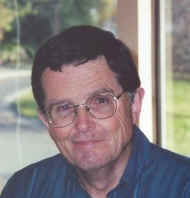
Duane Paul is a Charter Member of The Business Forum. He has 28 years of experience in financial analysis, agricultural economics, industry and resource analysis, benefit-cost analysis, land-use planning, and environmental analysis.
Duane joined NEA in 1991, and since that time he has directed or participated in more than 50 major studies for that organization. These varied projects have included critical issues of resource use and efficiency, environmental impacts, benefits and costs, economic and social impacts of resource shortages, and policy analysis. He also has directed studies to analyze the economic impacts of legislation at the federal and state levels.
Duane has directed or contributed to many benefit-cost studies in the Pacific States of America. He has, for example, helped to assess the regional economic impacts and benefits and costs of rules and regulations implementing legislation applying to federal water projects. He has also completed benefit-cost analyses of proposed flood control projects and of proposed irrigation systems on several Indian Reservations. His background in commercial banking complements his experience and education in economics. When Duane first became involved with The Business Forum in the mid-1980's he was employed as the Chief Economist, Southern California Region, with the Bank of America.
BACK TO Articles from The Business Forum Journal
 Search
Our Site
Search
Our Site
Search the ENTIRE Business
Forum site. Search includes the Business
Forum Library, The Business Forum Journal and the Calendar Pages.
Disclaimer
The Business Forum, its Officers, partners, and all other
parties with which it deals, or is associated with, accept
absolutely no responsibility whatsoever, nor any liability,
for what is published on this web site. Please refer to:
Home
Calendar The Business Forum Journal
Features
Concept
History
Library
Formats
Guest Testimonials
Client Testimonials
Experts Search
News Wire Join
Why Sponsor
Tell-A-Friend
Contact The Business Forum
The Business Forum
Beverly Hills, California U.S.A.
Tel: 310-550-1984
[email protected]
webmaster: bruceclay.com